
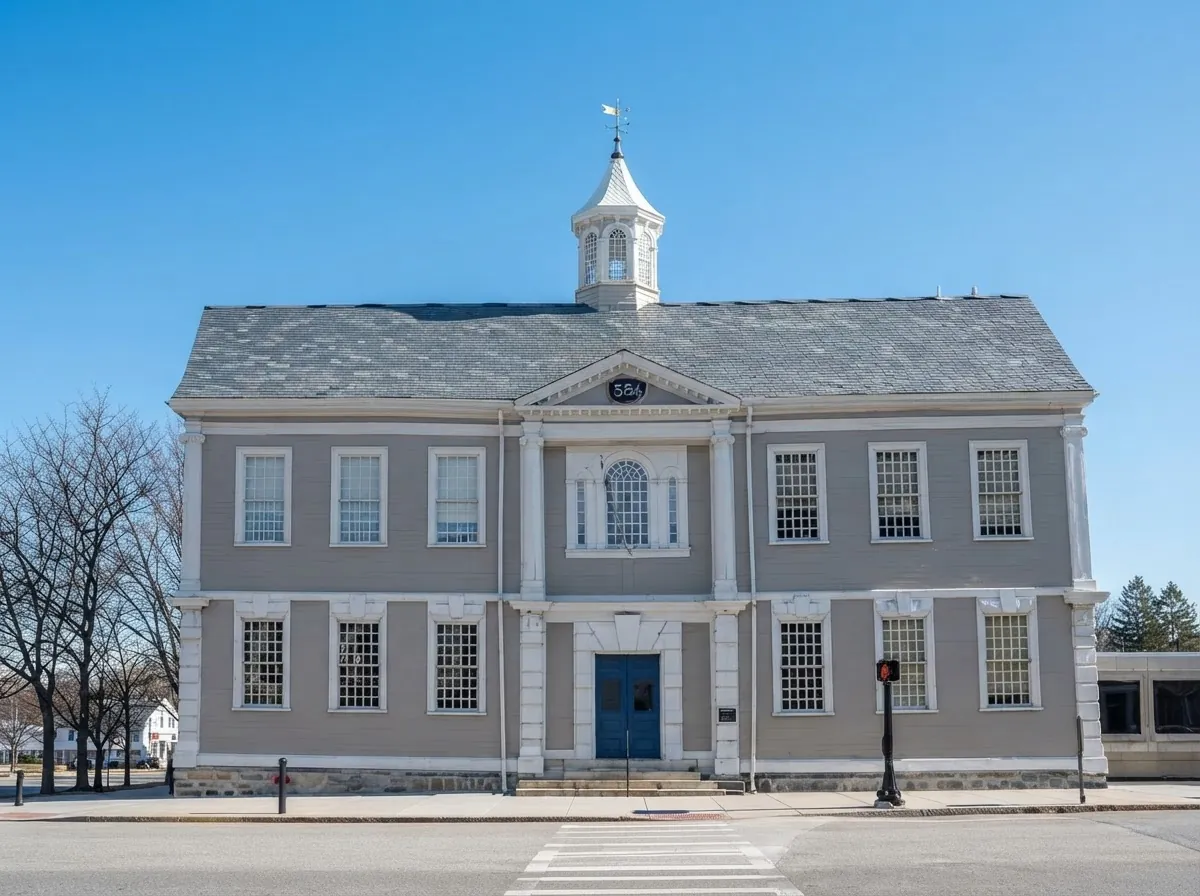
Court records in New London County, Connecticut, are maintained by the offices of the respective courts and are accessible through online portals, clerks' offices, and state resources. NewLondonCourt.us helps quickly navigate the publicly available court information of this county. Additionally, you can use the official portals of the Connecticut Judicial Branch, the city clerk's office, and state databases to search for cases, criminal records, and documents.
New London Court System Overview
Connecticut has a unique court structure: counties here have not played an administrative role since 1960, but the geographical concept of "New London County" remains relevant for defining the judicial district. The residents' cases of this area are heard by the Connecticut Superior Court — the state's only court of general jurisdiction, divided into judicial districts and geographical areas. New London belongs to the Judicial District of New London, which serves the cities of New London, Groton, Norwich, Waterford, Montville, Ledyard, and other municipalities of the county.
The State's Attorney's Office for this judicial district is located at:
The Superior Court in New London operates on weekdays. The specific schedule of sessions and office hours can be clarified on the official Connecticut state website or by calling the court.
Courts Serving New London
Residents of New London County have access to several court institutions — from the local Superior Court to federal courts:
| Court | Address / Contacts |
|---|---|
| Connecticut Superior Court — Judicial District of New London | 70 Huntington Street |
| Connecticut Superior Court — Geographical Area 10 (New London) | 70 Huntington Street |
| Connecticut Superior Court — Geographical Area 21 (Norwich) | 1 Courthouse Square |
| New London Probate Court | Contact information can be found on the Connecticut Probate Courts website |
| U.S. District Court for the District of Connecticut | 915 Lafayette Boulevard (Cases of county residents are considered by the federal court District of Connecticut) |
There are no municipal courts in Connecticut — all first-instance cases are heard by the Superior Court.
What Types of Cases New London Courts Hear
The Superior Court in the Judicial District of New London is a court of general jurisdiction. It hears virtually all categories of cases:
- Criminal cases: felonies, misdemeanors, infractions
- Civil claims, including small claims cases
- Family law: divorce, custody, alimony
- Juvenile and child protection cases
- Probate and guardianship cases — through a separate Probate Courts system
- Traffic violations and DUI
- Adoption, paternity establishment, protective orders
Each category is discussed in more detail below.
District Court Cases in New London
Connecticut does not have separate "district courts" at the county level — their role is performed by the Superior Court. The Judicial District of New London hears serious criminal cases, including class A–D felonies, after charges are filed. It also handles civil cases with claims over $2,500, appeals from lower courts, and post-conviction proceedings.
The case is handled by a Superior Court judge appointed by the state's chief judge. Criminal cases are initiated by the prosecutor through information or indictment, while civil cases are initiated by filing a complaint with the court clerk's office. The New London Judicial District State's Attorney's Office coordinates criminal prosecution.
Magistrate Court Cases in New London
Connecticut does not have separate magistrate courts. Instead, Geographical Area Courts (GA Courts) perform a similar function. GA 10 in New London serves the residents of the city and surrounding areas.
GA Courts handle:
- Misdemeanors and infractions
- Preliminary hearings in felony cases
- Traffic violations and DUI
- Small claims cases — up to $5,000
- Civil cases with small claims
- Housing matters
These courts act as "doors" to the system: most people first encounter the court system here — through a speeding ticket or minor offense.
Family Law, Probate, and Juvenile Matters in New London
Family Law. Divorce, child custody, alimony, protective orders, and paternity establishment are handled in the Family Division of the Superior Court Judicial District of New London. The complaint is filed with the court clerk's office at the Huntington Street address. Copies of divorce decrees are kept in the court, not in the vital records office.
Probate and guardianship cases. The Probate Court is a separate branch of the Connecticut court system. Each municipality has its own Probate Court or is part of a consolidated district. These courts handle inheritance, guardianship, conservatorship, and trust matters. Forms and contacts are available on the Connecticut Probate Courts portal.
Juvenile matters. Juvenile matters are handled by the Superior Court for Juvenile Matters. Juvenile case records are confidential under Connecticut law. Access to them is strictly limited.
How Cases Move Through the New London Court System
- Case initiation. A criminal case begins with an arrest or warrant issuance; a civil case starts with the filing of a complaint with the court clerk's office; a family case starts with the filing of a petition.
- Judge assignment. The chief judge or administrative judge of the district assigns cases to Superior Court judges.
- Initial hearings. In criminal cases — arraignment (presentation of charges and determination of bail). In civil cases — scheduling conference for planning timelines.
- Pre-trial stage. Parties exchange evidence (discovery), file motions. In criminal cases, plea negotiations may occur.
- Merits hearing. The case concludes with a trial (bench trial or jury trial), plea agreement, settlement, or default judgment.
- Post-judgment. Sentencing, appeal to the Appellate Court, enforcement of the judgment, or filing a motion for reconsideration.
Court Administration, Local Rules, and Public Access in New London
The courts in the Judicial District of New London are managed by an administrative judge appointed by the state's chief judge. The court clerk's office ensures daily operations — document reception, issuance of copies, record keeping.
Local court rules (Practice Book) are uniform for all Superior Courts in the state, although specific administrative orders may apply at the district level. The current text of the Practice Book is available on the Judicial Branch website.
Public access to records. Under Connecticut law, most court records are public. Exceptions apply to juvenile cases, sealed cases, certain family cases, and records closed by court order. Information about criminal records can be obtained through the state police or the judicial branch.
Attending hearings. Court hearings are generally open to the public. In some cases, the court may allow remote participation — check with the specific court clerk's office.
Court Records and Related Court Resources in New London
- Case search. The Judicial Branch of Connecticut offers an online case search system through the Case Look-Up portal on its official website.
- Criminal records. Criminal history information can be requested through the Connecticut State Police — Reports and Records or through the Criminal Records page on the Division of Criminal Justice website.
- Arrest warrant data. Arrest Warrant Data is published by the Office of Policy and Management.
- Inmate search. The Inmate Search on the Department of Correction website allows you to find individuals in state correctional facilities. Additional inmate information can also be requested.
- Police reports and checks. The New London Police Records Section accepts requests for reports and background checks.
- Vital records. Birth, marriage, and death certificates are issued by the New London city clerk (copy cost — $20). At the state level, records are available through the Vital Records Office of the Department of Public Health.
- Land records. In Connecticut, land records are maintained at the municipal level. The New London Land Records page explains the process for submitting and searching documents.
- Property assessment. The New London Assessor's Office provides information on property assessments and tax declarations.
- County law enforcement agencies. A complete list of police departments and state resident troopers in New London County is available in the Office of the Victim Advocate document.
- Probate Court. Forms, instructions, and the ability to file documents electronically are available on the Connecticut Probate Courts portal.
For general public information search about county court records, use NewLondonCourt.us.